
Blood on Board
From concept to clinical impact when implementing a blood program
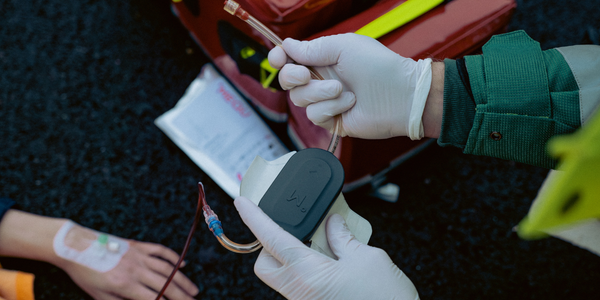
Between injury and definitive care, field protocols often determine whether a patient survives long enough to reach the hospital. TECC-guided trauma care reflects this urgency through the MARCH approach (Massive hemorrhage, Airway, Respiration, Circulation, Hypothermia, Head injury), supported by interventions such as tranexamic acid (TXA), rapid evacuation, and increasingly, pre-hospital blood transfusion.[1]
Within this framework, the use of warm blood at the point of injury is rapidly expanding. For instance, EMS agencies carrying blood in the U.S. have grown from 7 in 2018 to more than 370 in April 2026. [2]
As adoption increases, the focus is shifting from whether to implement whole blood programs to doing so effectively.
Delivering blood in the field requires clinical intent but also reliable logistics, clear protocols, and the ability to provide blood at the right temperature, at the right time.
Why Whole Blood is Essential in Trauma Care
A key objective in early trauma management is to prevent patients from entering the lethal triad of hypothermia, acidosis, and coagulopathy. These processes are interdependent: hypothermia impairs clotting, ongoing loss drives acidosis, and acidosis further disrupts coagulation.[1]
Whole blood transfusion supports haemostatic resuscitation by delivering red cells, plasma, and platelets in a single product. Compared to component therapy, this approach may better preserve coagulation function and oxygen delivery in the early phases of care.
Emerging evidence supports this strategy.
A 2022 study published in Annals of Surgery reported 48% lower mortality among trauma patients receiving whole blood compared to those treated with component therapy during haemostatic resuscitation. While outcomes depend on multiple factors, early access to blood products is increasingly seen as a critical component of care.[2]
However, transfusion alone is not sufficient. If blood is administered cold, it can contribute to hypothermia, potentially undermining the very benefits it is intended to provide. This makes temperature management an important consideration within any pre-hospital blood program.
From Protocol to Practice: Delivering Warm Blood in the Field
Establishing a whole blood program requires careful consideration of logistics, settings, and equipment before it can be translated into consistent field care.
Let’s look at 3 key considerations when implementing a whole blood program:
1. Temperature Management
Maintaining normothermia during transfusion is a well-established principle in hospital settings, but it presents unique challenges in the field. Blood products are typically stored cold, and prehospital environments often involve low ambient temperatures, wind exposure, and prolonged transport times.
Without active warming, transfusion of cold blood can exacerbate hypothermia, particularly in patients already vulnerable due to shock and exposure. At the same time, warming must be controlled and timely. Clinicians need blood to be ready when required, without introducing delays to care.
Portable blood warming technologies help bridge this gap by enabling on-demand warming at point of injury. Systems designed for pre-hospital use must balance speed, reliability, and portability, while operating within the constraints of limited power supply and variable environmental conditions.
2. Blood Storage and Handling Logistics
Beyond temperature, the safe handling of blood products is central to program sustainability. Whole blood requires strict storage conditions and careful coordination with hospital partners to ensure timely rotation and minimal waste.
A key consideration is that once blood is warmed, it cannot be returned to cold storage. This makes selective, on-demand warming particularly valuable in prehospital settings, where usage can be unpredictable.
Technologies that allow clinicians to warm only the blood they intend to transfuse, rather than pre-warming entire units, can help preserve limited supplies. Design features such as low priming volume, thus, play a role in minimizing unnecessary loss, supporting more efficient use of a scarce resource.
3. Protocols and Training
Even with the right equipment, successful implementation depends on people and processes. Clear clinical guidelines and protocols are essential to ensure safe and consistent care.
Pre-hospital providers operate in high-pressure, variable environments, where simplicity and reliability are critical. Equipment that integrates smoothly into existing protocols and is intuitive to operate can reduce training and support adoption across teams.
Looking Ahead
As pre-hospital blood programs continue to expand, the focus is shifting from feasibility to scalability. Delivering whole blood in the field is no longer a novel concept but an evolving standard that requires thoughtful integration of clinical evidence, operational planning, and enabling technology.
Fluid- and blood warming is part of the equation. Combined with effective hemorrhage control, balanced resuscitation, and well-defined protocols, the ability to deliver warm blood at the point of injury can help improve patient outcomes.
The °M Warmer System
The °M Warmer System is developed with precisely these challenges in mind, supporting the delivery of warm blood without reliance on hospital-based infrastructure.
With a priming volume of just 3.5 ml, the °M Warmer enables precise, on-demand warming, helping conserve valuable blood products.
Intuitive and user-friendly, the °M Warmer System shortens the learning curve and supports consistent real-world use, helping prevent hypothermia from point of injury to definitive care.
- Developed in collaboration with Military and Special Forces.
- Warms blood and IV fluids in less than 10 seconds.
- Compact in size and low weight – 1.8lbs battery and warmer.
- User-friendly design for a fast setup.
- Compatible with AC power for continuous use across the care continuum.
Sources
[1] https://esmed.org/tactical-emergency-casualty-care-enhancing-prehospital-trauma/
[2] https://prehospitaltransfusion.org/blood-program-interactive-map/
[3] K Thorsen, K G Ringdal, K Strand, E Søreide, J Hagemo, K Søreide, Clinical and cellular effects of hypothermia, acidosis and coagulopathy in major injury, https://doi.org/10.1002/bjs.7497
[4] Annals of Surgery 276(4):p 579-588, October 2022. | DOI: 10.1097/SLA.0000000000005603
About °MEQU
Founded in 2011, °MEQU develops advanced portable blood and IV fluid warming solutions to help prevent hypothermia and improve patient outcomes. Its °M Warmer System, developed in collaboration with military and emergency professionals, enables continuous warming across every stage of care – from first response to definitive treatment.
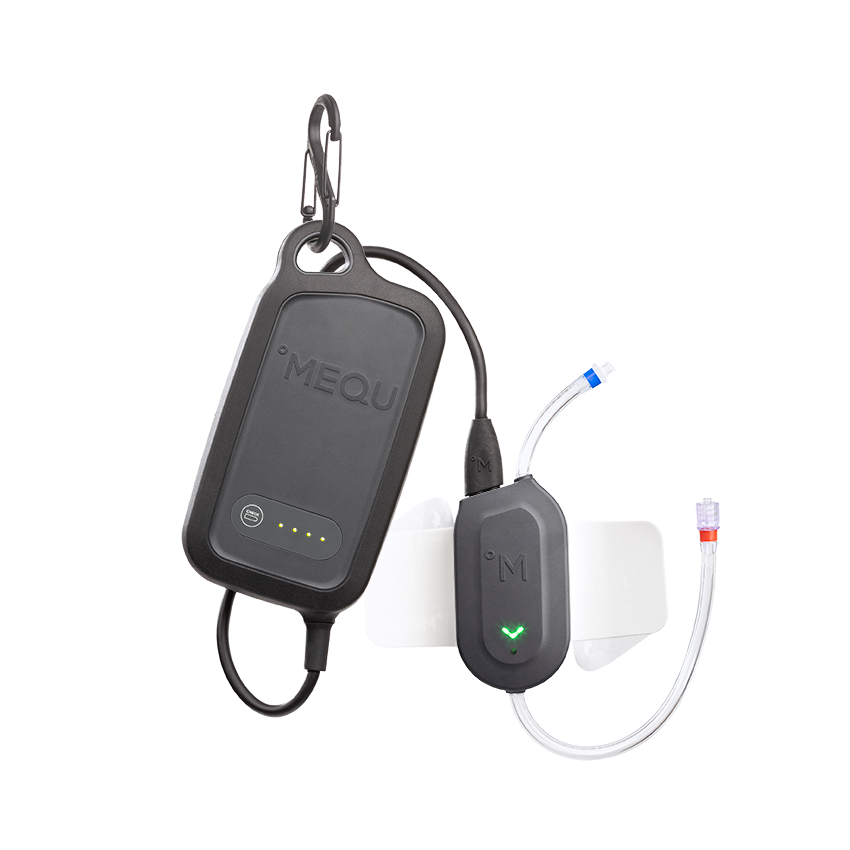
˚M Warmer System
The ˚M Warmer System is a portable blood and IV fluid warming device optimal for both pre-hospital and hospital use as it is small, simple to use, and easily integrates in existing workflows.