
Blood transfusions on the frontline
Lessons from the war in Ukraine
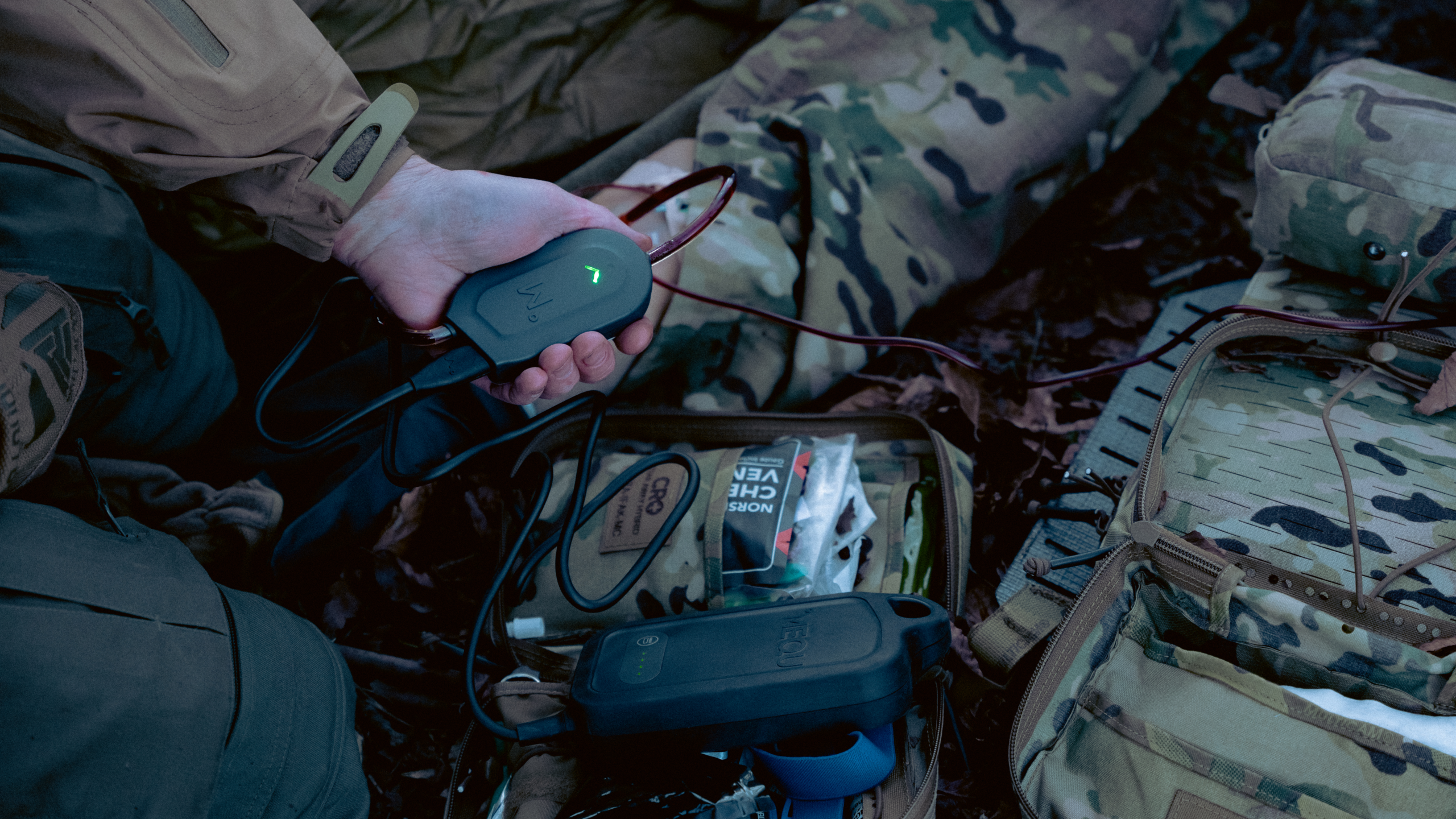
In Ukraine, the widespread use of drones has created zones of extreme danger near the front lines, delaying evacuation and forcing medics to adapt and provide advanced care in the field.
While new technology has changed how battles are fought, it has also changed how lives are saved. On the Ukrainian frontline, IV fluid and blood warmers are empowering medics to treat the injured long before they reach a hospital.
How delayed evacuation affects the “Golden Hour”
In 2023, the evacuation time was estimated to range between 15 minutes to 12 hours after injury. Consequently, treatment during the “golden hour” – the critical first hour after trauma – is usually caried out in the field.
Immediate treatment at the point of injury focuses on hemorrhage control, hypothermia prevention, and transfusions. This should prevent trauma patients from spiraling into what is known as the “triad of death”.
The triad of death is a cycle of hypothermia, acidosis, and coagulopathy where each element worsens the others. Hypothermia impairs clotting, uncontrolled bleeding fuels acidosis, and acidosis further damages the body’s ability to coagulate.
Combined with tourniquets, REBOA, and abdominal aortic junctional tourniquets (AAJT), warmed blood helps maintain perfusion and oxygenation, reducing the risk of hypothermia and interrupting the deadly triad.
In World War I, whole blood transfusion proved essential for saving wounded soldiers, outperforming all substitutes. Yet by World War II, those lessons were forgotten,
A 70% Survival Rate
In 2023, new Ukrainian regulations permitted combat medics to give whole blood and blood components in prehospital settings. The results were remarkable: in operations where evacuation was delayed, over 70% of patients receiving transfusions survived with very few adverse reactions.
The whole blood transfusions were made safe by using portable blood warmers. A Ukrainian study shows that heating blood to 37-42 °C maintains safety and coagulation function while reducing the risk of hypothermia.[1]
The lessons from the war in Ukraine, then, clearly demonstrate that early, safe, and warmed blood transfusions save lives.
Devices that can be easily transported and used on the frontline, enable medics to provide this type of advanced care and, ultimately, make it less deadly to endure a “golden hour” on the frontline.
Medical Innovation & The Walker Dip
Every major war leaves behind a trail of medical innovation, but evidence shows that the hard-learned lessons leading to them are often forgotten when the war ends.
In World War I, whole blood transfusion proved essential for saving wounded soldiers, outperforming all substitutes. Yet by World War II, those lessons were forgotten, and thousands died before leaders reinstated a proper blood program. After the war, it was dismantled again only to be rebuilt during the Korean War under President Truman.
This phenomenon is known as the Walker Dip. It refers to the post-war decline in military medical readiness and innovation that occurs after rapid advances made during conflict are neglected in peacetime.[2]
A 70% survival rate among trauma patients receiving warm blood transfusions underscores the importance of maintaining blood-warming technology and programs
What Ukraine has taught us
The Walker Dip holds urgent relevance as Ukraine’s military has developed remarkable systems and technology for trauma care.
The 70% survival rate among trauma patients receiving warm blood transfusions underscores the importance of maintaining blood-warming technology and programs during peacetime. This is arguably something the rest of the world could learn from as well.
Surely, trauma care would have looked different in the initial phases of the war if the regulatory approval for prehospital whole blood transfusion had already been in place.
While the Walker Dip is clearly visible throughout the pages of history, it is fortunately not all lessons that are lost. After all, it was in response to challenges faced by the Danish Defence in the Middle East that °MEQU developed a portable blood-warming device to support prehospital transfusions.
This shows the relevance of translating wartime medical innovations into peacetime preparedness and explains why lessons learned in Ukraine should not be forgotten.
Sources
- Dmytro O. Samofalov, Dmytro Androshchuk, Igor Korpusov, Leonid Kopus, Nataliya Izhytska. [Management of damage control surgery and resuscitation at different stages of evacuation]. Wiadomości Lekarskie Medical Advances, VOLUME LXXVIII, ISSUE 9, SEPTEMBER 2025
- Gurney JM, Cap AP, Holcomb JB, Staudt AM, Tadlock MD, Polk TM, Davis C, Corley JB, Schreiber MA, Beckett A, Spott MA, Shackelford SA, Van Gent JM, Stallings JD, Martin MJ, Riggs LE. The thin red line: Blood planning factors and the enduring need for a robust military blood system to support combat operations. J Trauma Acute Care Surg. 2024 Aug 1;97(2S Suppl 1):S31-S36..
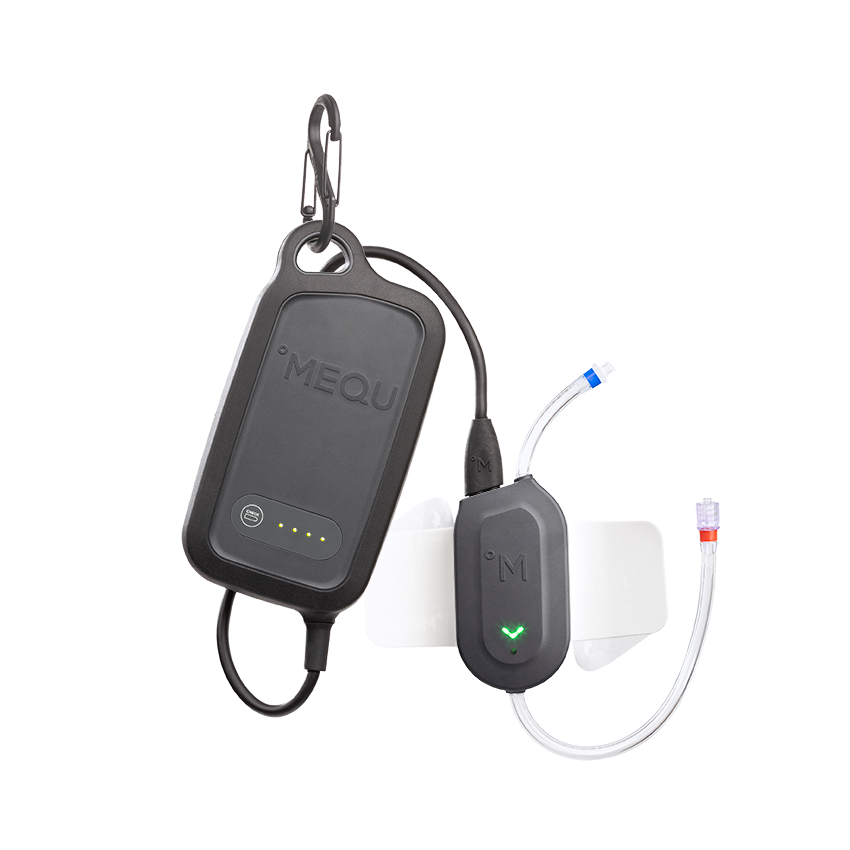
˚M Warmer System
The ˚M Warmer System is a portable blood and IV fluid warming device optimal for both pre-hospital and hospital use as it is small, simple to use, and easily integrates in existing workflows.