
The Cost of Not Using Portable Blood Warmers
A Hospital Cost-Benefit Analysis
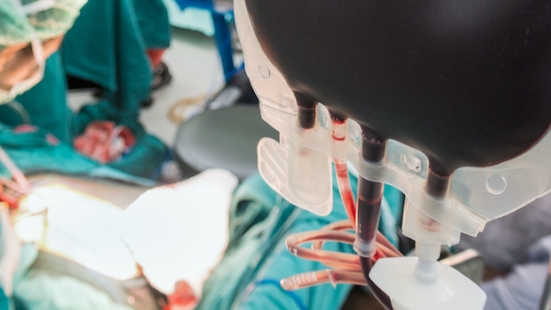
Decisions around using portable blood warmers at hospitals often focus on the upfront price. Yet, overlooking their use introduces many different costs related to patient safety, operational efficiency, and staff workflow.
These extend far beyond the device price tag, with implications for patient outcomes, hospital resources, and clinician effectiveness.
This article explores the potential cost of not utilizing portable blood warmers in hospitals.
Consideration #1: Patient Safety
The most immediate and critical cost of not using portable blood warmers is patient safety.
Transfusing cold blood pre-hospital can rapidly lower a patient’s core temperature, increasing the risk of hypothermia, which is linked to impaired coagulation, increased bleeding, and cardiovascular instability.[1]
A large retrospective study of nearly 16,000 trauma patients found that those admitted with a core temperature below 36 °C had significantly higher mortality.[2]
That is why guidelines from both the Association for the Advancement of Blood & Biotherapies (AABB) and the Tactical Emergency Casualty Care (TECC) recommend active warming during massive or rapid transfusions to prevent hypothermia-related complications.[3] [4]
Maintaining normothermia can be done with blood warming at point of injury and in transit, ensuring that the patient enters the hospital without the added complications of hypothermia.
Therein lies the major power of portable blood warmers.
A multicenter trauma study demonstrated that for every 1 °C drop below 36 °C in body temperature, red blood cell usage increased by approximately 10% within the first 24 hours
Consideration #2: Increased Resource Requirements
Beyond individual patient outcomes, hypothermia impacts hospital operations and resource requirements.
Patients who become hypothermic during transfusion often require more blood products, longer ICU care, and a longer hospital stay. This puts heavy strain on hospital resources such as blood banks, operating rooms, and critical care units.
A multicenter trauma study demonstrated that for every 1 °C drop below 36 °C in body temperature, red blood cell usage increased by approximately 10% within the first 24 hours.[5]
In other words, hypothermic patients require more transfused blood than normothermic patients to maintain adequate oxygen delivery and compensate for bleeding.
Increased blood utilization affects inventory planning, staffing, and throughput, while prolonged ICU stays reduce bed availability and delay admissions. These inefficiencies ripple through the hospital system, quietly increasing operational costs and limiting capacity.
However, portable blood warmers help mitigate these effects by maintaining normothermia and, consequently, reducing downstream resource consumption.
The potential cost of not using portable blood warmers is clear: greater patient risk, higher complication rates, and avoidable clinical- and financial burdens.
Consideration #3: Workflow Complexity through the Continuum of Care
As clinicians move a patient from the emergency department to the operating room and then to the ICU, they may encounter multiple blood warming systems, each requiring priming, setup and adjustment.
Managing multiple stationary blood warmers is time-consuming, can heighten stress in urgent care, and uses a substantial amount of blood for priming.
From a workflow perspective, then, portable blood warmers:
- Reduce time pressure and errors during critical transfusions.
- Allow them to focus solely on patient care rather than equipment change.
- Reduce priming volume significantly to save valuable blood resources.
These factors directly affect safety and performance.
Conclusion: Portable blood warmers protect both patients, staff, and resources
The potential cost of not using portable blood warmers is clear: greater patient risk, higher complication rates, and avoidable clinical- and financial burdens.
Consequently, integrating portable blood warming into standard hospital protocols supports patient safety, operational efficiency, and cost-effectiveness.
Sources
[1] Killeen RB, Goldin J. Massive Transfusion. [Updated 2025 Sep 15]. In: StatPearls [Internet]. Treasure Island (FL): StatPearls Publishing; 2025 Jan.
[2] Klauke N, Gräff I, Fleischer A, Boehm O, Guttenthaler V, Baumgarten G, Meybohm P, Wittmann M. Effects of prehospital hypothermia on transfusion requirements and outcomes: a retrospective observatory trial. BMJ Open. 2016 Mar 30; https://pmc.ncbi.nlm.nih.gov/articles/PMC4823393/
[3] AABB Guide to the Use of Blood Warming Devices; https://marketplace.aabb.org/PRODUCTFILES/16971885/233015_sam.pdf
[4] TECC Guidelines; https://www.c-tecc.org/guidelines
[5] Lester ELW, Fox EE, Holcomb JB, Brasel KJ, Bulger EM, Cohen MJ, Cotton BA, Fabian TC, Kerby JD, OʼKeefe T, Rizoli SB, Scalea TM, Schreiber MA, Inaba K; PROPPR study group. The impact of hypothermia on outcomes in massively transfused patients. J Trauma Acute Care Surg. 2019 Mar; https://pubmed.ncbi.nlm.nih.gov/30444856/
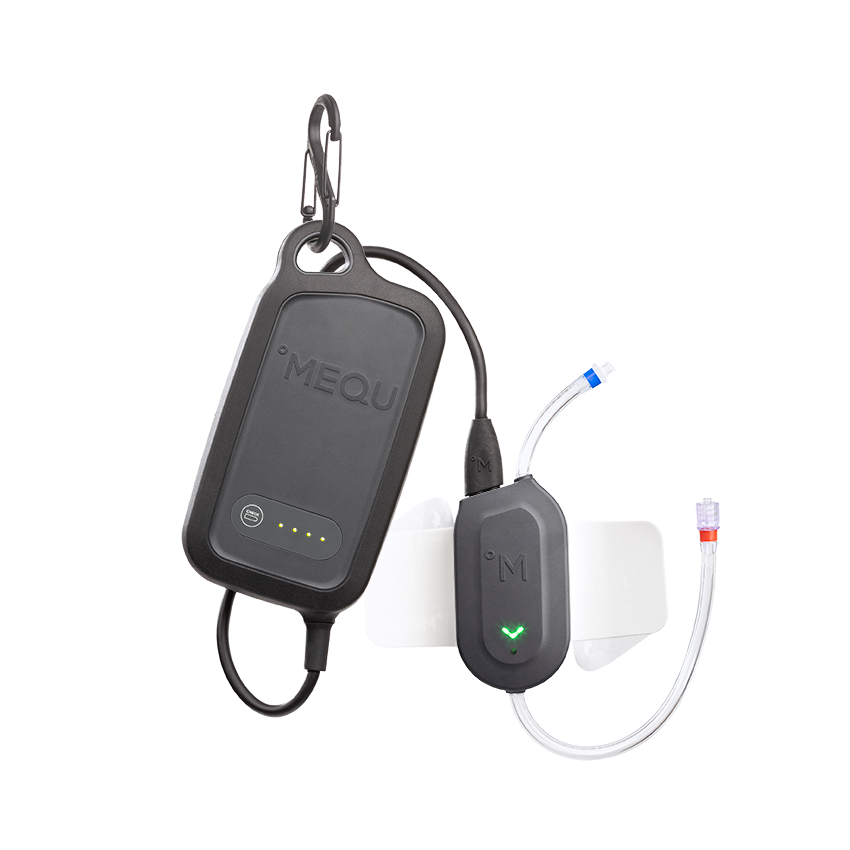
˚M Warmer System
The ˚M Warmer System is a portable blood and IV fluid warming device optimal for both pre-hospital and hospital use as it is small, simple to use, and easily integrates in existing workflows.